

We Analysed Four London Postcodes for Bubble Tea Viability
A Locus location analysis of Brixton, Stratford, Shoreditch, and Camden for a bubble tea cafe concept, comparing demographics, dwell time, competition, and business activity.
Adam
Marketing Manager
If you are planning to open a bubble tea shop in London this summer, you have probably run through the usual shortlist in your head: Shoreditch for the young crowd, Camden for the tourists, Stratford because of Westfield, Brixton because it is up-and-coming. Every one of those instincts has some logic to it.
But instincts and data are different things.
We ran all four postcodes through Locus, an AI-powered location intelligence platform, scoring each on a full suite of signals: demographic fit, dwell time, competitor density, accessibility, and foot traffic patterns. The results challenged several of the most common assumptions about where London's next bubble tea success story should open.
The Methodology
We analysed four London postcodes for a bubble tea cafe concept using Locus's site suitability and trade area analysis tools:
- Brixton SW9 8JL - a high-density South London neighbourhood with a strong food and drink culture
- Stratford E15 1XD - East London, adjacent to Westfield Stratford City
- Shoreditch EC2A 3PJ - Inner East London, known for its young professional and creative population
- Camden NW1 8AH - North London's most visited tourist area, centred on Camden Market
For each postcode, Locus returned a one-mile catchment demographic profile, AI suitability score, competitor mapping, accessibility data, demand signals including dwell time, peak hours, and peak days, and a search volume trend. The analysis parameters were held consistent across all four locations: business type set to Cafe, niche set to Bubble Tea. The full study took under 30 minutes to run.
The Headline Scores
Brixton, Stratford, and Camden each returned a Locus AI Score of 70/100. Shoreditch scored 60/100.
At first glance, this puts Shoreditch at the bottom and creates a three-way tie at the top. But looking only at the headline score is one of the most common mistakes operators make when using location intelligence tools. The composition of the score matters as much as the number.
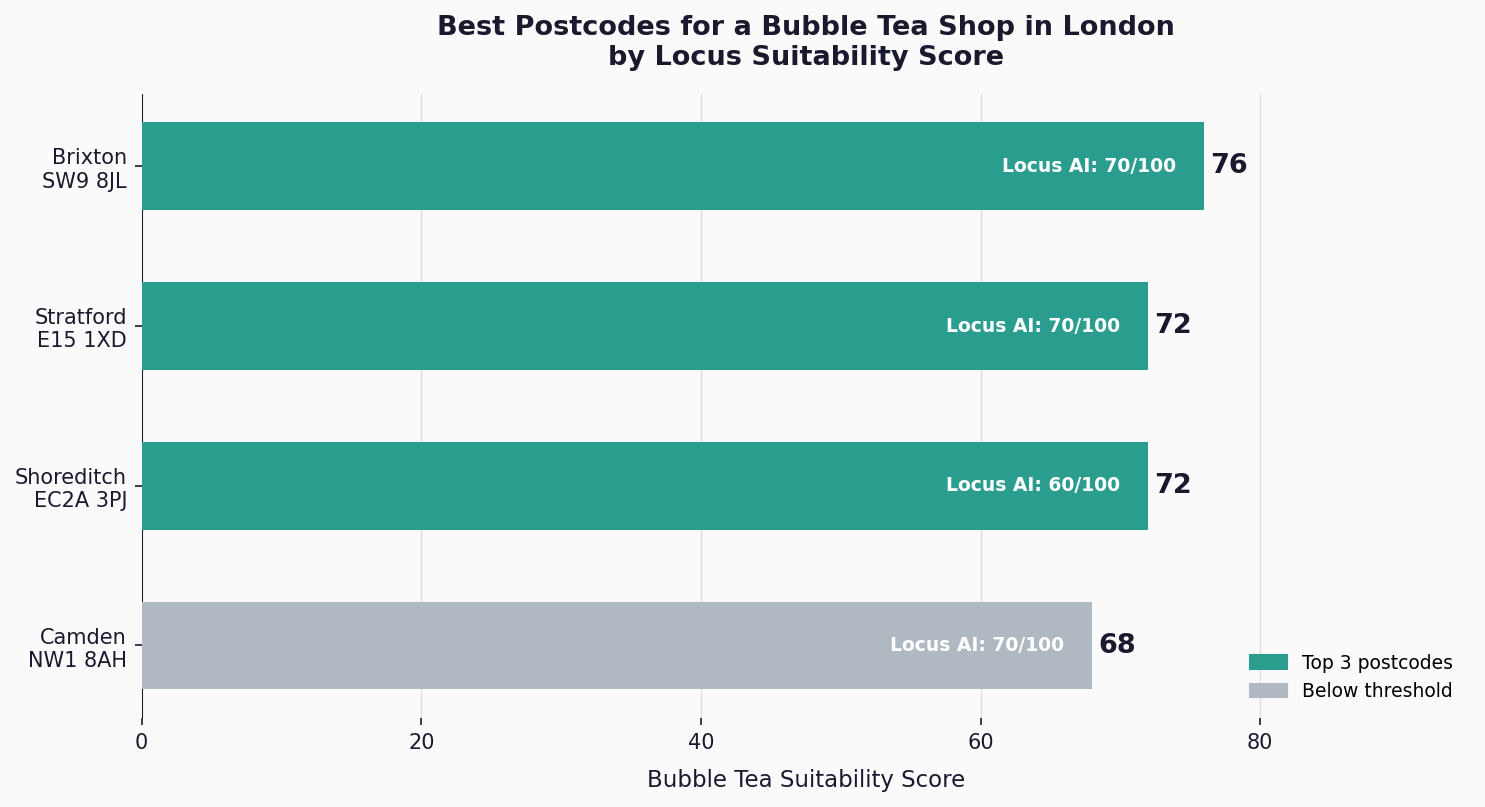
Chart 1: Bubble tea suitability score by London postcode.
Shoreditch: The Demographic Outlier
Within a one-mile catchment of EC2A 3PJ, the 18-44 age bracket accounts for 70% of residents, with 37% specifically aged 18-29. That is, by a significant margin, the highest concentration of the core bubble tea demographic in this study.
Shoreditch's average customer visit duration, according to Locus, is 158 minutes. This is more than double the dwell time recorded in Stratford at 70 minutes and more than three times Camden at 47 minutes. For a bubble tea business, where repeat purchases, social media sharing, and friend groups sitting in for long sessions drive revenue, dwell time is not a secondary metric. It is the business model.
Peak trading in Shoreditch falls on weekend afternoons, which aligns precisely with bubble tea's highest-converting daypart. Locus mapped 12 direct cafe competitors in the trade area, against an average rating of 4.7. That suggests a market that is active, but not yet saturated.
Business activity growth in the area stands at +12.9%, with 4,475 businesses opened versus 3,450 closed. The neighbourhood is expanding commercially, not contracting.
The lower AI score of 60/100 reflects general cafe suitability benchmarked against all cafe formats. For the specific niche of bubble tea targeting 18-29 year olds, the postcode's demographic and behavioural profile outperforms every other location in this study.
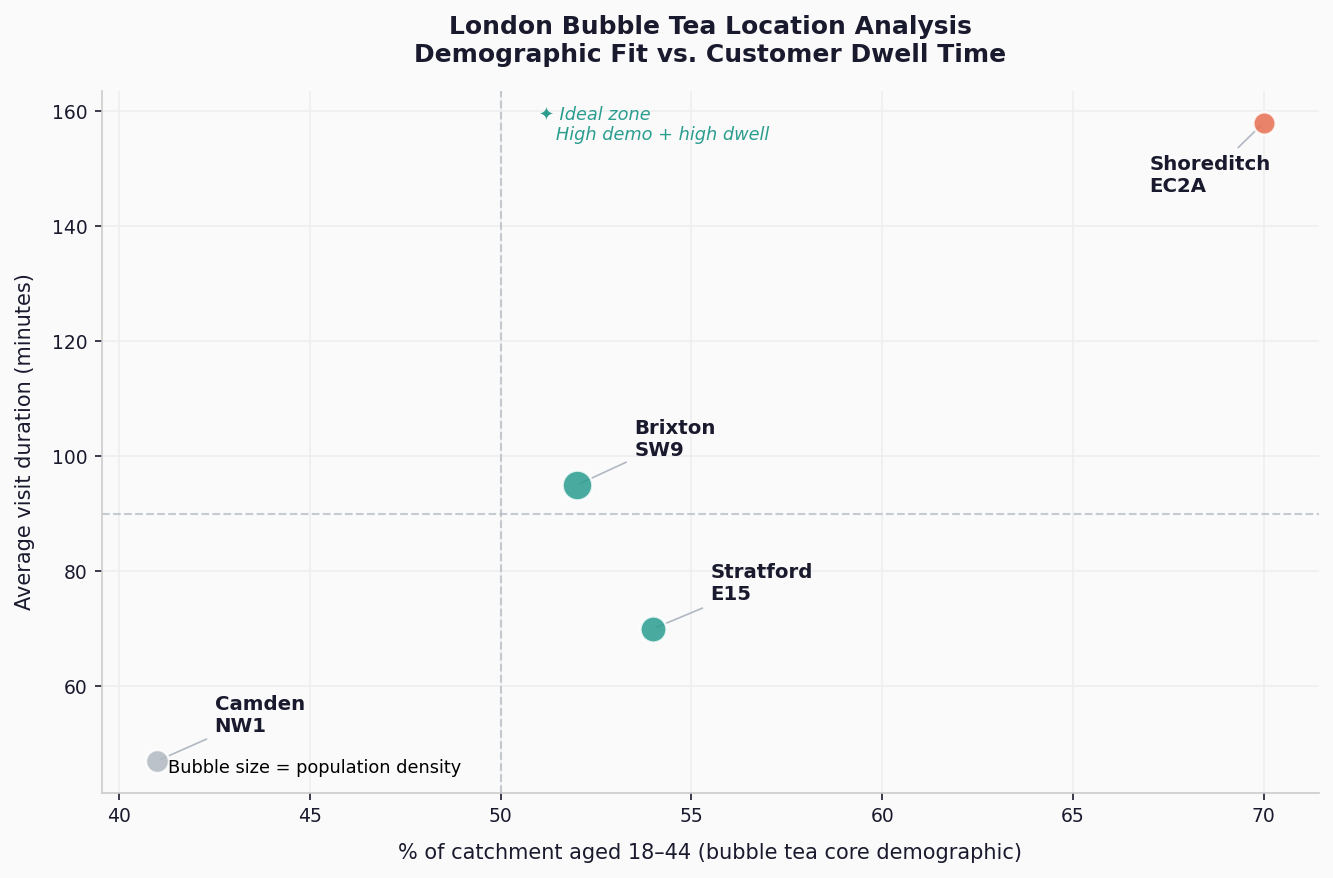
Chart 2: Demographic fit versus customer dwell time across the four tested postcodes.
Camden: The Tourist Traffic Problem
Camden NW1 8AH returned a Locus AI Score of 70/100 and the highest household income in the study - a median of GBP 50,500, rated Very High affluence, at 61% above the national average. It has 43 transport connections in the trade area and sits next to one of London's most visited markets.
On paper, it looks like an obvious location.
The dwell time data tells a different story. Locus recorded an average visit duration of 47 minutes in Camden, with peak trading falling on weekend mornings. The 18-29 age bracket accounts for just 18% of the catchment - the lowest of the four postcodes studied. The 45-64 bracket, at 26%, is the largest single age group.
What Camden has is tourist foot traffic and destination spending. What it lacks is the community dwell-time pattern that sustains a bubble tea cafe over the long term. A visitor spending 47 minutes at Camden Market is buying a quick snack and moving on, not sitting for a second round of taro milk tea with oat topping.
This distinction is almost impossible to identify from a street visit or from aggregated footfall data. It requires the kind of behavioural signal - average visit duration, peak hour pattern, demographic breakdown - that Locus surfaces as part of its trade area analysis.
Stratford: Reading the Business Activity Signal
Stratford E15 1XD scored 70/100 in Locus, with a median household income of GBP 41,300, high affluence at 32% above national average, a young demographic skew with 54% aged 18-44, and access to Westfield Stratford City within the catchment.
The case for Stratford looks strong on demographics and income. But the Locus business activity metric returned a figure of -1.1%, reflecting more business closures than openings in the residential catchment area.
This does not mean Westfield itself is struggling. It means that the street-level trading environment outside the mall - where an independent bubble tea operator would realistically trade - is seeing net contraction. For a franchise operator with deep pockets and a confirmed Westfield unit, this data point may be irrelevant. For an independent considering a site on Stratford Broadway or the surrounding streets, it warrants serious attention before signing.
Peak trading in Stratford also falls on weekdays, not weekends, suggesting the area's primary foot traffic is commuter-driven rather than leisure-driven. That profile suits a coffee and grab-and-go concept better than a sit-in bubble tea cafe.
Brixton: The Steady-Volume Case
Brixton SW9 8JL has the highest population density of the four postcodes tested: 16,446 residents per square kilometre, compared to 9,203 for Shoreditch, 12,599 for Stratford, and 9,835 for Camden.
It returned a Locus AI Score of 70/100. Business activity growth stands at +5.2% - healthy and positive, if less dramatic than Shoreditch's 12.9%. The age distribution gives a 52% share to the 18-44 bracket. Brixton has Brixton Station 217 metres from the analysis point and 33 transport connections in the trade area.
Brixton does not have Shoreditch's extreme demographic concentration, Camden's income levels, or Stratford's Westfield proximity. What it has is density, growth, and a food culture with genuine local roots. For an operator who wants dependable volume with manageable competition, Brixton's profile is the most consistent of the four.
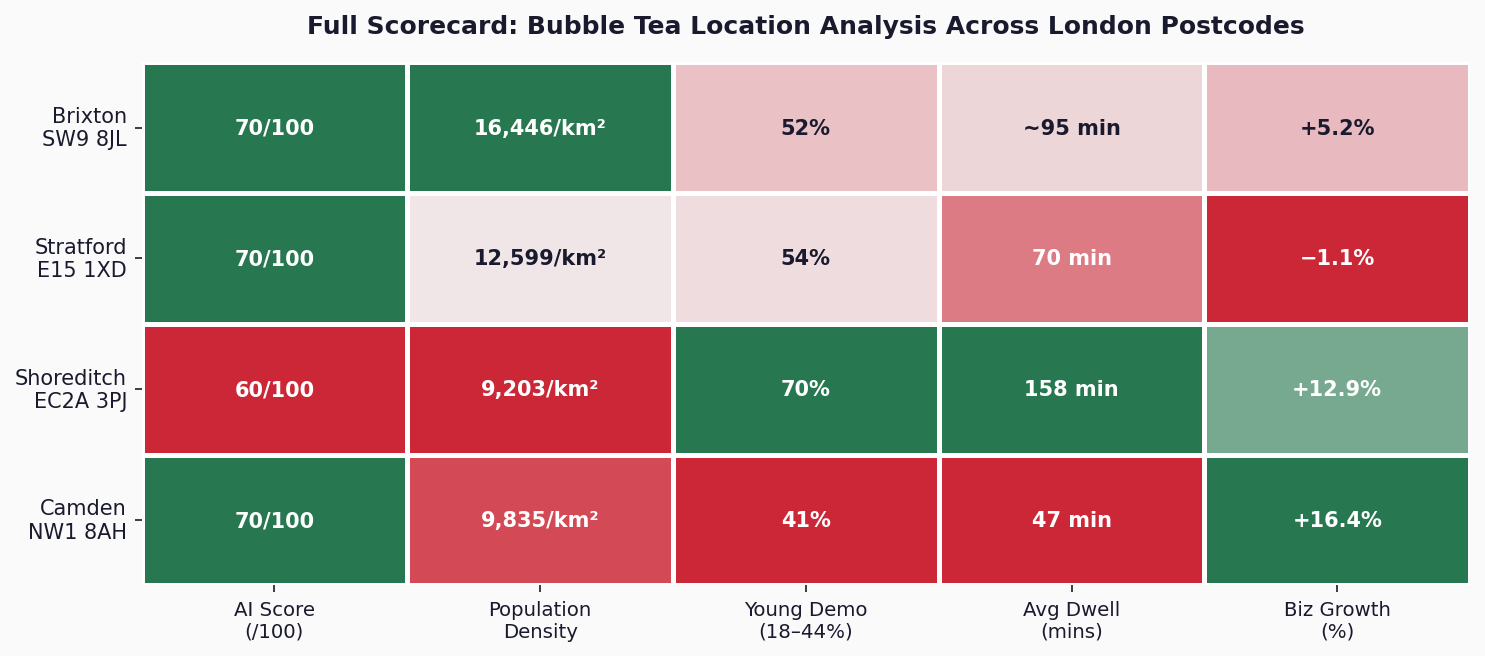
Chart 3: Full scorecard for the London bubble tea location analysis.
What This Means for Bubble Tea Operators in 2026
The search volume data tells part of the story: "bubble tea London" is tracking at 8,100 monthly searches, up 42.3% over the past three years. The demand is there and it is growing.
But where that demand converts into sustainable revenue depends on factors that search volume alone cannot tell you. Dwell time, demographic age bracket, business activity trajectory, and peak hour patterns are the variables that separate a thriving bubble tea cafe from one that does brisk Saturday afternoon numbers and quiet everything else.
Based on this study, Shoreditch EC2A 3PJ represents the strongest undervalued opportunity for a bubble tea operator in London right now - a postcode with the city's most concentrated young demographic, the longest average customer dwell times, and a growth-phase business environment. Its Locus AI score of 60/100 reflects its ranking against all cafe formats. Against the specific profile of a bubble tea business, the data tells a different story.
The most expensive thing a bubble tea operator can do is choose a location based on instinct that turns out to be tourist throughway rather than community dwell. That difference, in London in 2026, is the difference between a second site and a closed shutter.
All location analysis in this article was run in Locus. Locus scores locations using foot traffic data, ONS demographic profiles, competitor mapping, and trade area analysis drawn from multiple data sources. The complete study, covering four London postcodes with full AI scoring, competitor league tables, and demand signals, took under 30 minutes to run.
Run your own location study in Locus: locusintel.io/map
Keep reading
Related guides from the Locus library.
AI-Powered Location Intelligence for Local Business Growth
How Locus brings competitor mapping, demographics, foot traffic, catchment analysis, local reputation tracking, and AI recommendations into one practical workflow.
How AI is Revolutionizing Location Intelligence for Businesses
Discover how artificial intelligence is transforming business location decisions. Learn about AI-powered site selection, predictive analytics, and automated insights.