Built for Site-selection Professionals
A consistent comparison. A shortlist you can explain.
Bring candidate locations, catchment assumptions and scattered local evidence into one research workflow. Compare places against the same brief, then show why each candidate deserves the next step.

A repeatable research workflow
Less scattered research.
A clearer reason for every shortlist.
- 01
Set a consistent brief.
Define the business format, candidate criteria and catchment assumptions before comparing results.

- 02
Compare places on the same basis.
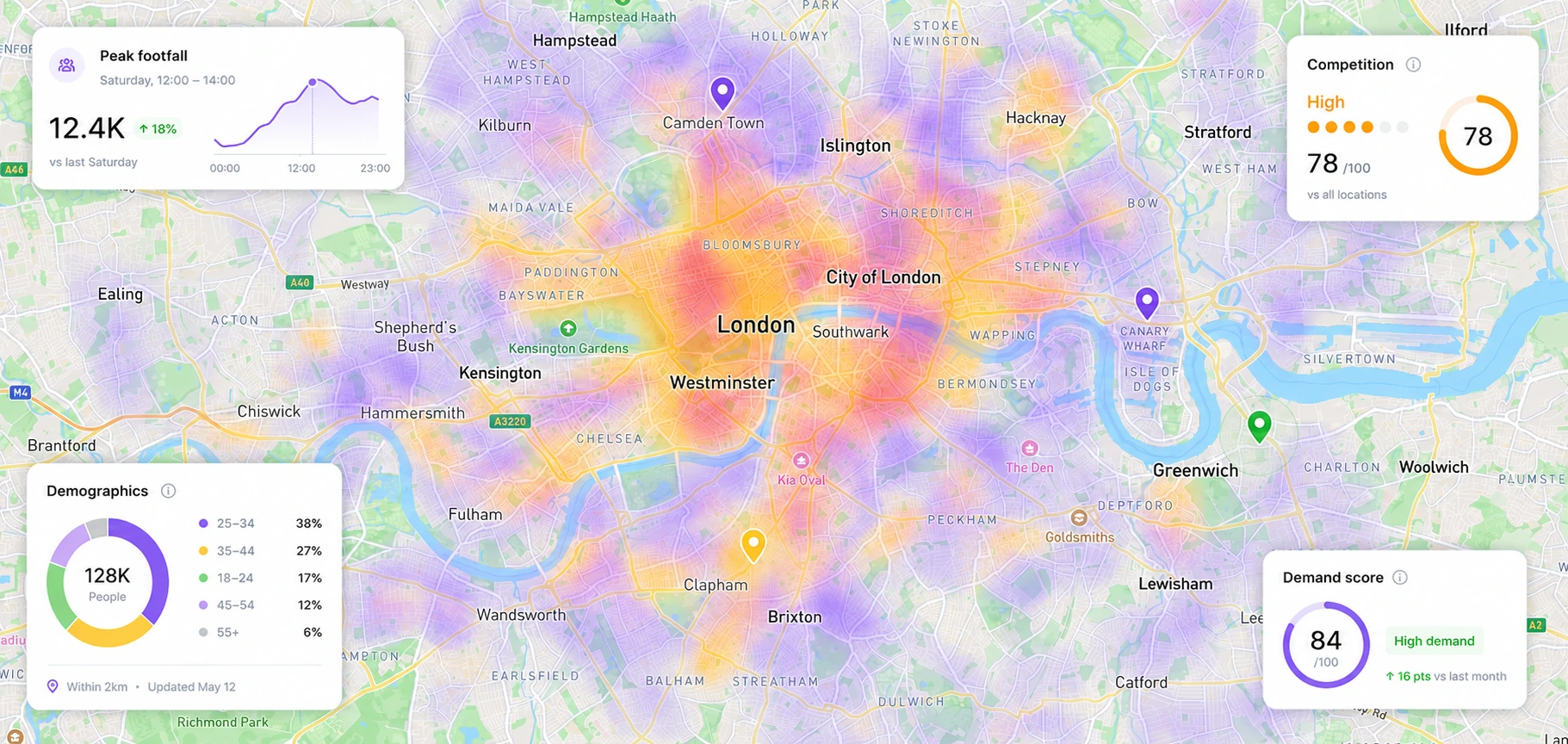
Bring demographics, nearby competitors and available access signals into a repeatable review. Make source differences and gaps visible.

- 03
Explain the shortlist.
Present the evidence and trade-offs behind each candidate. Keep the remaining due-diligence questions alongside the recommendation.

Supported demographics · Catchment and travel-time assumptions · Nearby competitor context · Source-qualified location evidence. Availability varies by location and source.